Spills happen in every busy workplace. A scraped knee in a gym, a sick child in a classroom, a cut at the salon station, a dropped tray in a food-service line. The difference between a thirty-second non-event and a stressful scramble is whether you decided ahead of time what to do. Readiness is not a binder. It is a kit in a known spot and a short playbook everyone has run before.
This is a simple, plain-language playbook for cleanup readiness across schools, gyms, salons, and food service. It covers what to stock, the steps to follow, and how to reset so you are ready for the next time.
Why Readiness Beats Reaction
When something spills, the clock is running and people are watching. If the supplies are scattered, expired, or missing, a minor incident turns into a disruption, and the cleanup itself can spread the problem instead of containing it. Deciding in advance removes the guesswork at the exact moment you do not want to be guessing.
Speed: a stocked, known kit means action in seconds, not a hunt across the building.
Containment: the right method keeps a small mess from becoming a large one.
Confidence: staff who have run the steps once stay calm and do it right.
Build Your Cleanup Kit
A readiness kit is a self-contained grab-and-go, not a shelf of loose supplies. Everything needed for one cleanup lives together so nobody assembles a kit mid-incident.
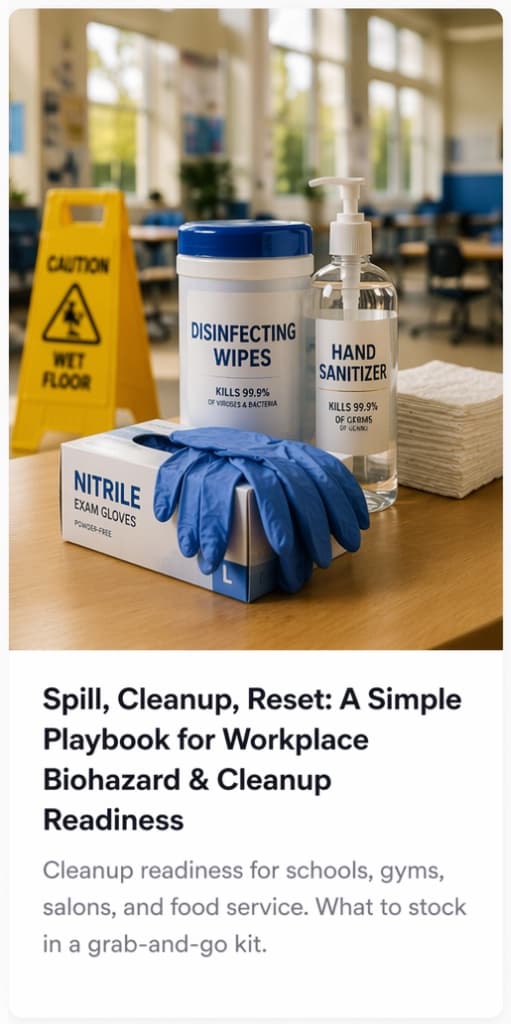
Core Contents
Barrier protection: disposable gloves and, where appropriate, eye and apron protection.
Absorbent material: to soak up and lift liquid before anything is wiped.
Containment and disposal: leak-resistant bags and ties to seal waste safely.
Surface treatment: an appropriate cleaner and disinfectant for the surfaces in your space.
Cleanup tools: a scoop or pickup tool so nothing is handled directly, plus wipes and towels.
A simple instruction card: the steps printed and kept right in the kit.
Keep a kit in each zone where spills are likely, and store back stock so a used kit is rebuilt the same day, not next week.
The Playbook: Spill, Cleanup, Reset
Three phases, in order, every time. Short enough that anyone on the team can remember it under pressure.
1. Spill: Secure the Area
Move people back and signal the area so no one walks through it.
Grab the nearest kit and put on barrier protection before touching anything.
Stop any ongoing source if it is safe and simple to do so.
2. Cleanup: Contain and Remove
Cover the spill with absorbent material and let it lift the liquid rather than smearing it.
Pick up material with a tool, never bare hands, and place it directly into the disposal bag.
Treat the surface with the appropriate cleaner, then disinfect and allow proper contact time.
Seal the disposal bag and remove it to the correct waste stream.
3. Reset: Make Ready for Next Time
Remove protection carefully and wash or sanitize hands.
Restock the kit from back stock so it is whole again immediately.
Note the incident if your site logs them, and flag any supply that ran short.
Return the kit to its known location so the next person finds it where they expect.
Readiness by Setting
The playbook is the same everywhere; the volume and placement change with the space.
Schools: kits near classrooms, the nurse area, and high-traffic commons; staff briefed at the start of each term.
Gyms: kits at the floor and locker areas where sweat, blood, and dropped drinks are routine; frequent disinfecting of shared surfaces.
Salons: kits at each station for nicks and product spills; barrier and disinfection habits built into the normal close-down.
Food service: kits separated from food zones, with strict disposal and surface treatment to keep cleanup away from prep areas.
Train the Team in Minutes
A playbook that lives in a drawer does nothing. The point is that anyone on shift can run it without thinking. That takes only a short, repeatable briefing, not a formal course.
Show the kit: where it lives, what is in it, and how to open it. Familiarity is half the battle.
Walk the three phases: spill, cleanup, reset. Keep the language exactly the same every time.
Name the responsible reset: whoever uses a kit rebuilds it that day, so the next person is never caught short.
Refresh on a schedule: a two-minute reminder at the start of a term, season, or new-hire onboarding keeps it fresh.
Keep It Ready Between Incidents
A kit only works if it is whole. Build a thirty-second check into a regular routine: confirm each kit is full, sealed, in date, and in its spot. Replace anything used, and reorder back stock before it runs out. Readiness is a habit, not a one-time setup.
Assign each kit an owner who runs the quick check.
Keep back stock for every kit so same-day rebuilds are always possible.
Reorder consumables before they hit zero, not after.
Watch for any item that runs short repeatedly, which usually means the kit needs a higher par.
How DLM Helps
DLM Solutions Group packages cleanup readiness so you can grab a complete solution instead of sourcing parts. The Bloodborne Pathogen (BBP) Cleanup Bundle ($189) is a self-contained grab-and-go for the spill that needs careful containment and disposal, with barrier protection, absorbent, and sealable waste handling in one box. The Infection Control Supply Bundle ($265) keeps shared surfaces in schools, gyms, and salons disinfected as a routine, not just after an incident. And the Workspace Consumables Bundle ($285) keeps the everyday gloves, wipes, towels, and disposables that every cleanup draws down at a steady par level.
All bundles ship within the US. Explore the full set at dlmsolutionsgroup.com/supplies, and for multiple locations or a whole organization, request volume pricing on our bulk quotes page.
DLM Solutions Group has equipped workplace operators for cleanup readiness since 2022.